Last week I interviewed a Blacksmith in Charleston, interviewed a visual artist and storyteller in Savannah, and I attended a hog killing in Ridgeville, South Carolina. All of it, I realized, was a reminder that culture survives by doing. You can’t just talk about it or read about it. You gotta do it, and you gotta invite others into the doing.
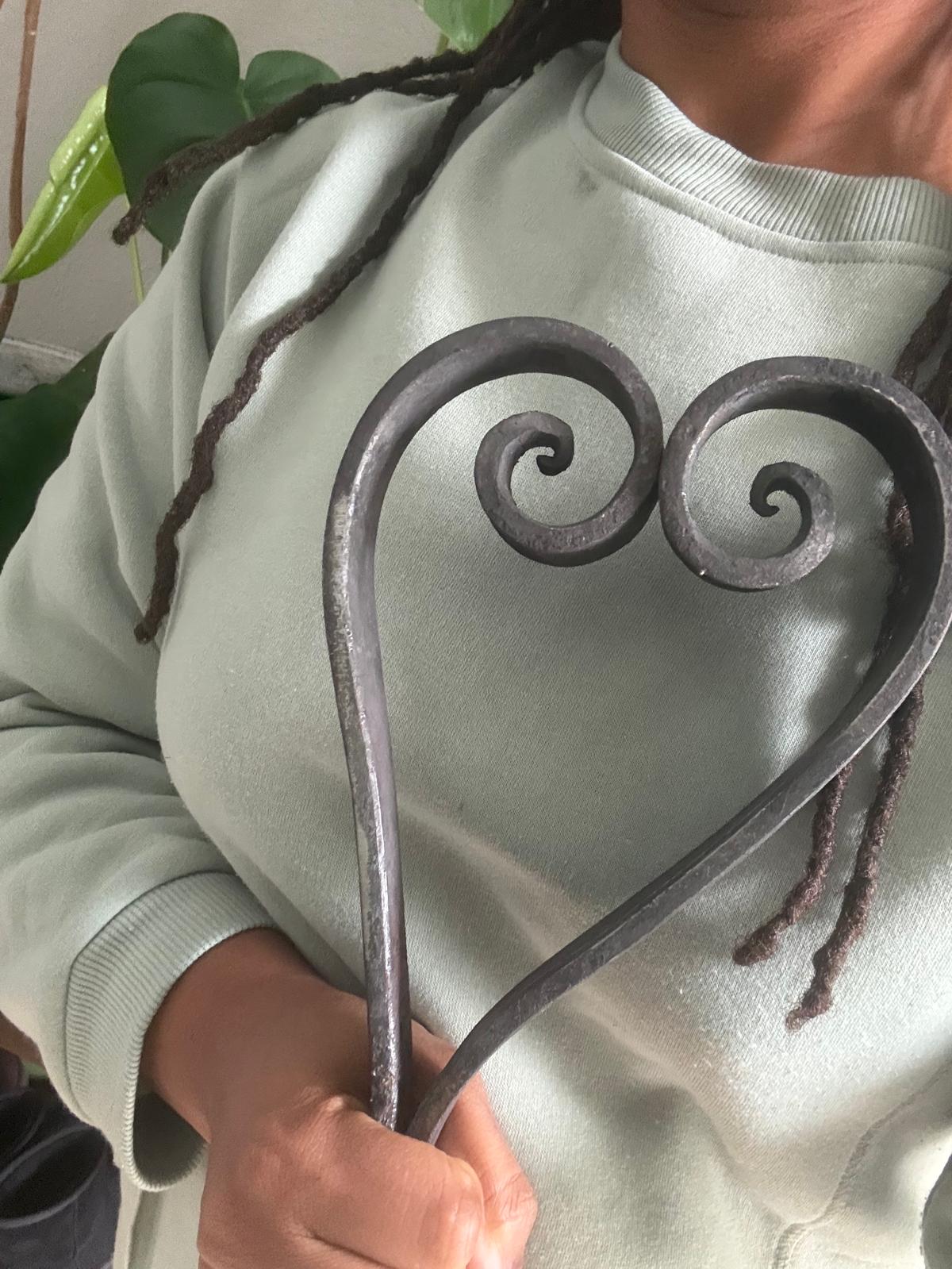
As a fellow for the Center for Craft, I chose my research subject as Blacksmithing in the American South. I wanted to see just how deep the symbols in the ironwork around New Orleans, Charleston, and Savannah, in particular, went. Were they actually hidden messages?
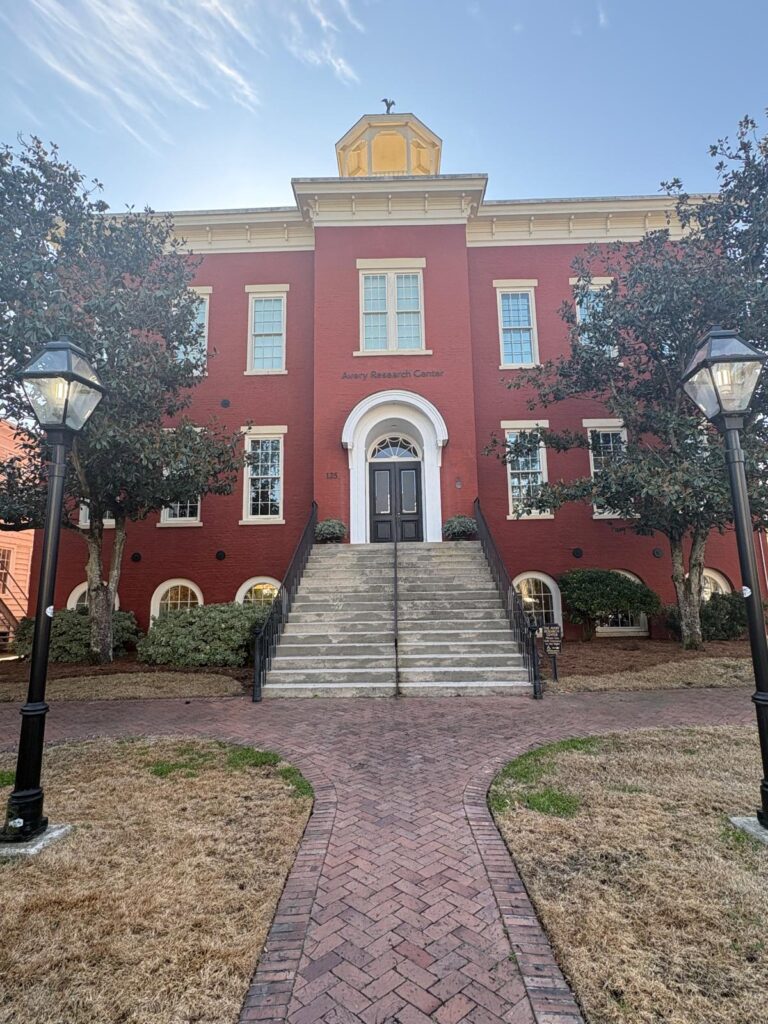
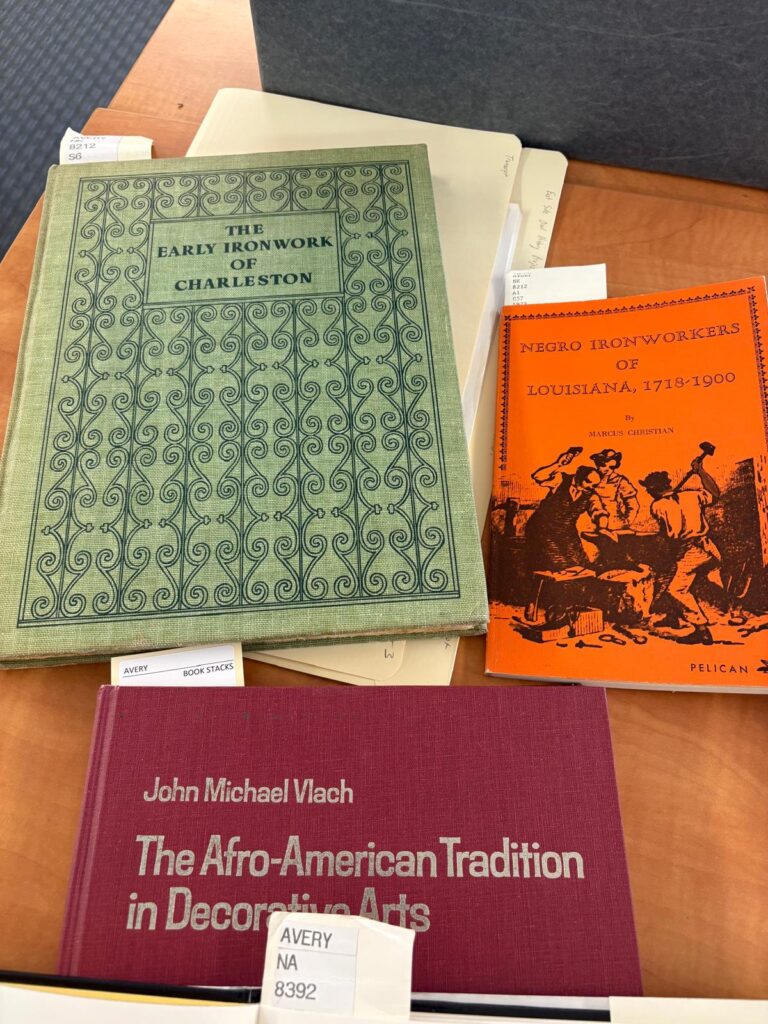
I started off at the Avery Research Center, which first opened in 1685 to train educators and other community leaders, then it reorganized in 1985 as an archive and museum to preserve Black Charleston history, mostly. The staff was welcoming, the building is beautiful, and, because you have to make an appointment to research, archives are already pulled for you when you get there. Like most research institutions, it’s very quiet. Very careful. Very use pencils, not pens. But I got my hands on some very fascinating material. The most interesting thing I learned? That when our enslaved ancestors rose up against their oppressors, they often wielded spears and other weapons made by blacksmiths.
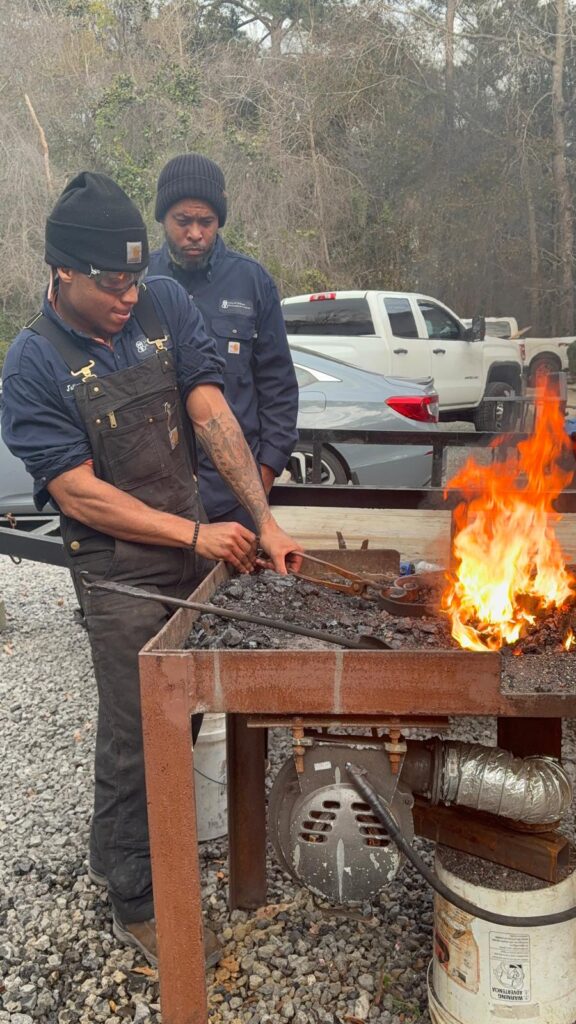
I asked my friend, BJ, a Charleston native, if he knew a blacksmith in the city. He introduced me to Julian Williams, Sr. When I pulled up to Julian’s shop, I thanked him for saying yes on such short notice. He nodded to BJ’s character, that when BJ points him in a particular direction, he trusts it. Most interesting thing I learned? That blacksmithing is mentioned in the Bible, that a community wasn’t a community without a blacksmith, and that the shops also functioned as social spaces. Men would gather ’round the fire and krak teet.
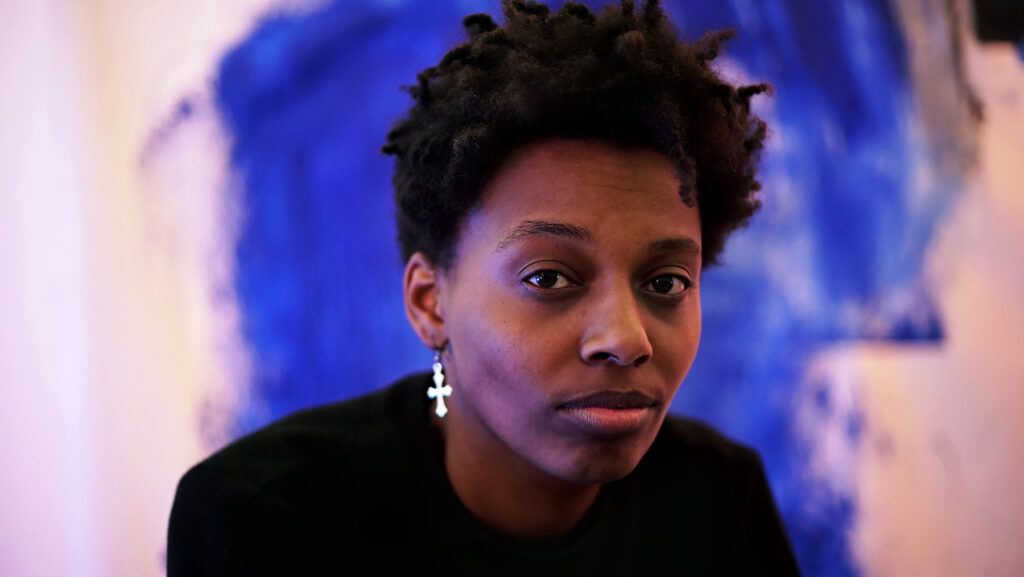
Couple days later, I interviewed Le’Andra LeSeur, a brilliant visual artist born in the Bronx and raised there and in Stone Mountain, Georgia. Before I interview anyone, I research as much as I can about them, their culture and their work. In one of her interviews, she mentioned growing up being told that she’d be somebody one day. I was told the same thing. I asked her what it meant “to be somebody.” Originally, she thought it meant being a famed trailblazer like Obama or Oprah. Now she understands it differently: to live in the ordinary, to have the courage to be yourself, and to be grounded in who you are.
I agree with Le’Andra’s definition of being somebody. I thought of Zora Neale Hurston’s short story, “Drenched in Light” about a young girl with a big personality from a small town being raised by her very conservative grandmother. She’s not a bad girl, as her grandmother would have us believe. She just ain’t afraid to pursue her curiosity and desires. She’s very much grounded in who she is and she’s fulla talents and offerings that she can’t help but share. Even as a young girl, she’s somebody. Not famous, not leading a community, just unabashedly herself.
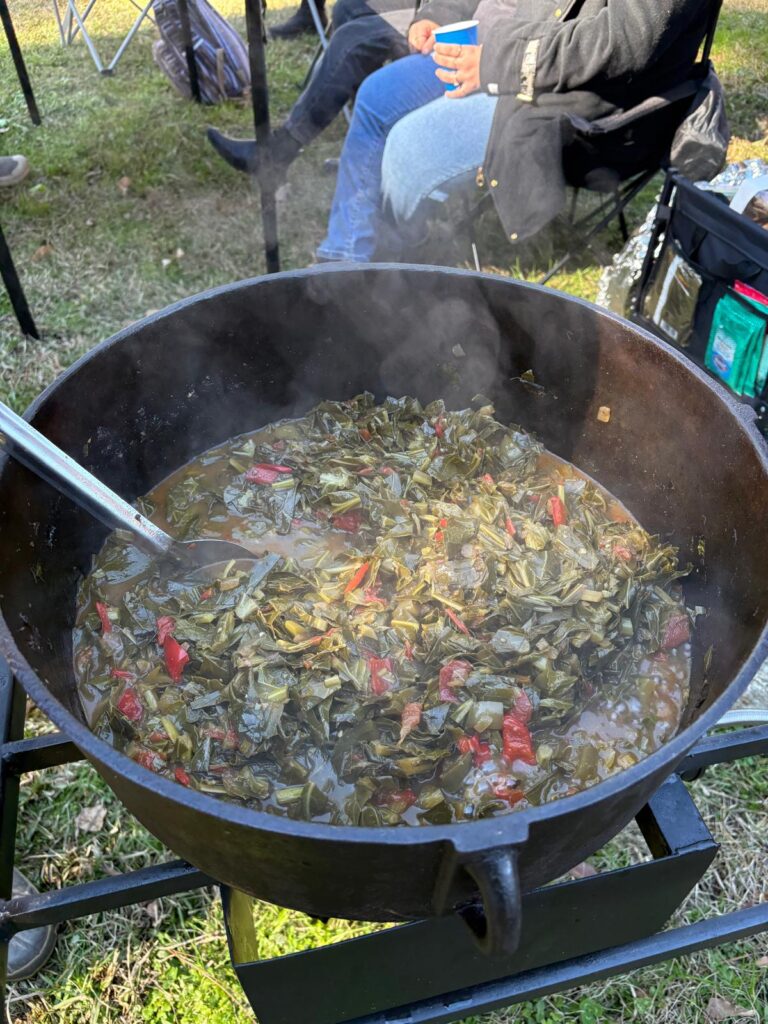
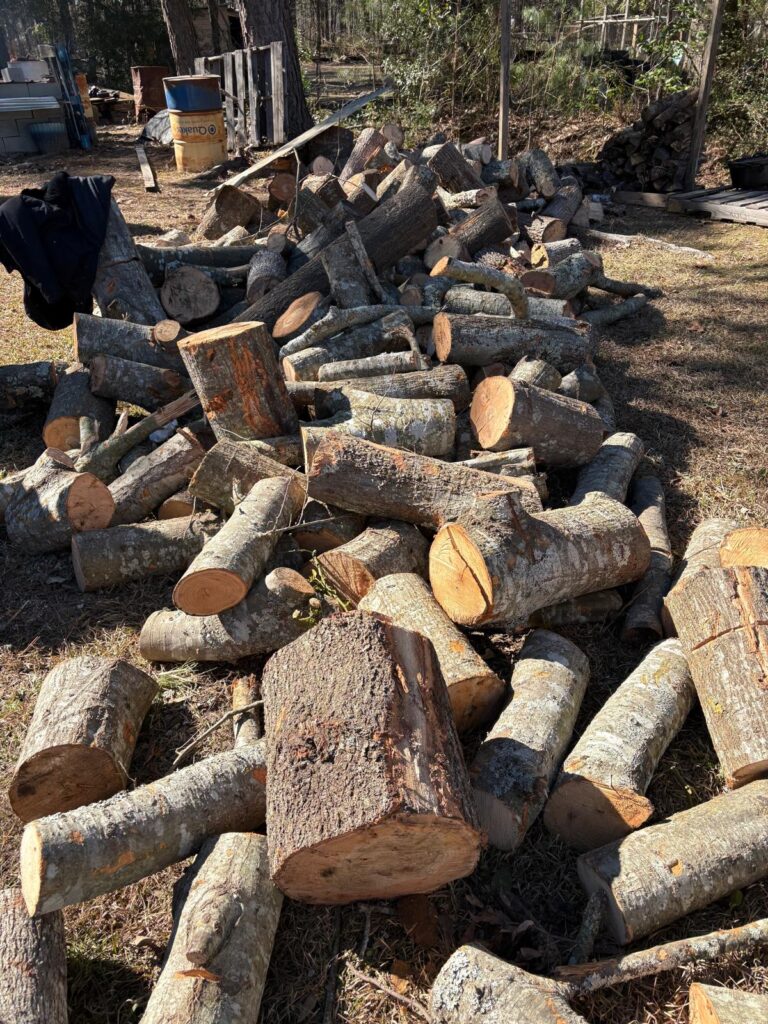
In Ridgeville, South Carolina I witnessed a lot of that too. I was invited to a hog killing out there. It’s the second one I’ve ever been to. This one had no entrance fee, loud music, and bout every two feet you walked, there was another cast iron pot or grill cooking something up and you were welcome to it. These hog killings (or boucheries) are long-held traditions in pork-eating communities. Early in the morning, a hog is sacrificed, a prayer of thanksgiving is shared, the hog is cleaned and broken down by as many hands as possible, and, throughout the day and evening, various cuts of meats are cooked onsite as well as preserved to feed families for months. It’s A LOT of work, but it’s done together and joyfully.
Marvin Ross, one of the organizers of this particular boucherie, is so grounded in who he is, in what he does, and he’s full of offerings that he can’t help but share. BJ was out there too, sleeves rolled up and putting in work. Julius Williams and his wife pulled up from Charleston. Amanda and Jasmine drove in from Birmingham, Alabama. Me, my daughter and my mom came in from Savannah. I met so many people from all over the South. Nobody was too good to do anything. Whoever was able was willing.
Together, we turned an ordinary Saturday into one of my favorite archive records.