

Ruff Ryders, Roadmaps, and Reminders
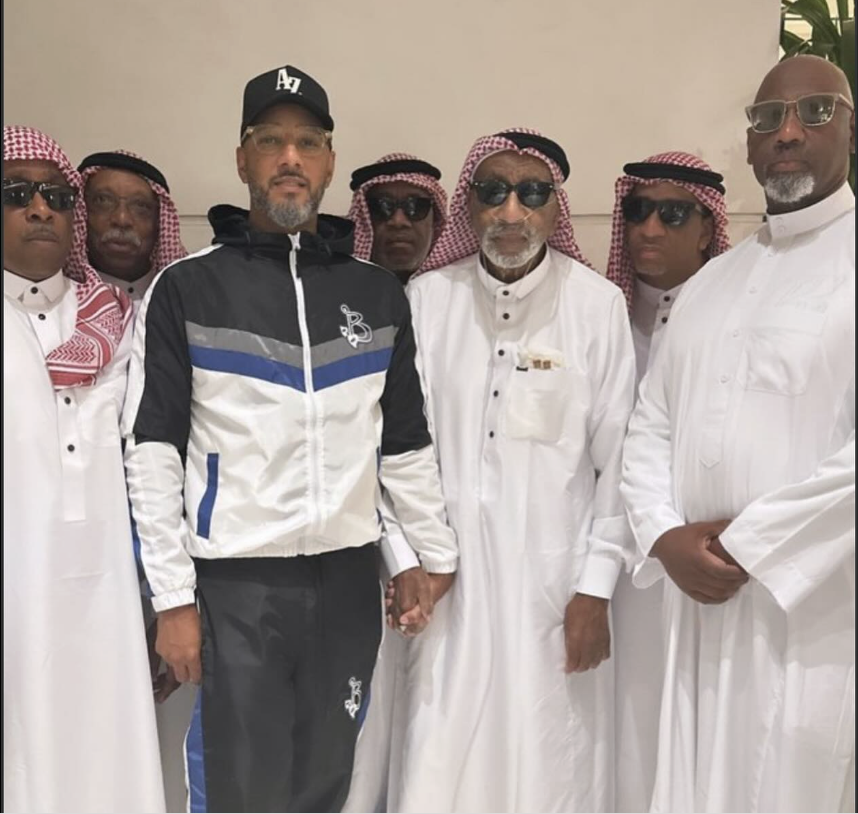
Elbert Shamsid-Deen was one of those people who carried history on the tip his tongue and rightfully so! I mean, the man joined the Great Migration in 1949 at 10 years old, leaving Charleston, SC for Harlem, NY (just him and his little brother). He was the first Black wholesale distributor in NYC, heard Malcolm X speak in person, was at the hospital when Elijah Muhammad passed, knew Minister Farrakhan personally, got Muhammad Ali to say yes to a business deal, his children founded Ruff Ryders in his basement, and his grandson, Kasseem “Swizz Beatz,” had a plane chartered by a Saudi Arabian prince to take Mr. El, his wife, and a few of their sons to make that sacred Mecca pilgrimage. And this ain’t even a third of his story!
He was 86 and lived a big life! Generous, complicated, intentional. His life left an imprint. I wrote his autobiography several years ago, and now I’m co-writing his obituary, which is the third one I’ve written. This work is sacred. Writing folks’ books, yeah, that too, but them obituaries is another story. Gathering a life into paragraphs, choosing the stories that carry someone forward when they ain’t here no mo. Stories that someone will pull out of a box decades from now or download from a digital family tree to read and learn.
Losing him made me feel, even more deeply, what I was planning to write about. Because when an elder passes, we don’t just lose a person. We lose a library. A landscape. A whole archive of memory and meaning, unless we’ve taken the time to ask about it, honor it, and pass it on.
Mr. El was the kind of man—like SO many of our elders are—who could tell you exactly how things used to be and what he hoped you’d do with that information. Writing his obituary reminded me of how fragile that chain of transmission is, how powerful it is too.
I had planned to write an entirely different newsletter, but his passing made me pivot. So instead, I want to remind you to check on your elders. Sit with them. Record them. Ask the stories. Ask the names. Ask the “how” and the “why” and the “what happened next.”
History ain’t just fun facts. It’s a road map.
Our elders’ stories are blueprints, survival manuals passed down in people form. When an elder shares what they’ve lived through, they’re not just reminiscing. They’re handing us strategies.
Shanina Carmichael made a social media post one day saying, “This ain’t the worst president that we’ve had,” and that truth hit me. Our people have survived leadership that didn’t love us, didn’t see us, didn’t even count us as human. We’ve survived laws designed to box us in, economies designed to trap us, and eras designed to break our spirits. And we kept living. Kept building. Kept dancing, cooking, falling in love, giving birth, being fly af, telling lies, and telling our truth. And it’s not just politics. Heartbreak ain’t new. Trying to balance work, family, and your own sanity ain’t new. **Feeling pulled between moving on or staying put ain’t new.
Even our relationship to things has changed. We talk about “minimalism” and “sustainability” like they’re new trends, but before WWII, people (not just Black folks but humans in general) weren’t big consumers. There wasn’t much trash and certainly not much litter. Reusing, repairing, and repurposing was the norm.
So when we sit at our elders’ feet, or flip through their old photos, or listen to a story that wanders through three decades before landing on the point, we’re not just hearing about “back then.” We’re being handed instructions. Instructions on how to navigate grief, how to keep going when money gets tight, how to leave that man who ain’t treating you right, how to reconcile with the fact that hoochies and other wild women been here, how to build and sustain community when the world feels cold, how to stay human in a system that keeps trying to grind us down.
These memories aren’t nostalgia. They’re maps. And every time an elder passes, we lose a mapmaker.